The completion of Dubai International’s 50 glorious years of operation in September 2010 was a major milestone in Dubai’s relatively short aviation history. When Dubai opened its first airport in 1960- a humble beginning by any standard, involving a small building for terminal and a sand-compacted runway, no one but the visionary leaders who had dreamed big had any inkling where the journey would take them.
In just five decades, Dubai has established itself as a centre for trade, commerce and tourism and is fast emerging as the global aviation hub of choice. Over this period, Dubai International has grown at an average annual rate of over 15 per cent, welcoming more than 400 million passengers.
Emirates airline, which is coincidently almost exactly half of Dubai International’s age, has grown to become one of the world’s largest, most profitable and fastest growing carriers. Carrying 27 million passengers aboard its ever-expanding fleet in 2010, Emirates is on track to become the world’s largest carrier in the next few years. Dubai International is also home to Dubai Duty Free, which with sales of over US$1.27 billion in 2010, is the world’s single largest duty free operation. Regarded as the world’s fastest growing start-up airlines, flydubai, Dubai’s own low cost airline, turned two in June 2011 and is already the second largest contributor to Dubai International’s growing passenger traffic after Emirates.
The economic contribution from the growth of aviation in Dubai is not limited to the emirate or the UAE but has global significance. As Emirates and flydubai expand their fleet and destination networks, and as the number of airlines flying into Dubai continues to grow, adding more global destinations, Dubai’s contribution to world economy will only increase.
Towards this end, Dubai, as always, is planning for tomorrow and building what will become its future airport. The first phase of the Dubai World Central, Dubai’s second airport, opened on June 27, 2010. A long term project work on the airport will continue well into the next decade. With a planned annual capacity of 160 million passengers and 12 million tonnes of freight, DWC will become the world’s largest airport.
None of these achievements could have been realised without the one vision that is embodied in Dubai’s two historical leaders. The first is Sheikh Rashid bin Saeed Al Maktoum, the late ruler of Dubai, who realised, as early as the 1950s, the importance of the aviation industry in transforming Dubai into a world-class commercial hub. His Highness Sheikh Mohammed bin Rashid Al Maktoum, Vice-President and Prime Minister of the UAE and Ruler of Dubai, has been continuing his father’s efforts taking bold but wise decisions that have made Dubai what it is today.
Billions of dirhams have been invested in the development of the aviation sector in Dubai. These investments have paved the way for Dubai to create for itself an intrinsic role on the world’s air transportation map, thanks to sound planning, open skies policy and the ability to deal with challenges and convert them into opportunities. Even during the toughest times, when decision-makers elsewhere hesitated to take aggressive decisions, Dubai was progressing with confident steps and contributing to support the world’s aviation industry. Dubai has been able to fulfill its promises and continues to prove that it is a main player in a highly competitive environment.
In the last 50 years, Dubai has achieved a lot, and plans to achieve new heights are already being worked out for the next five decades.
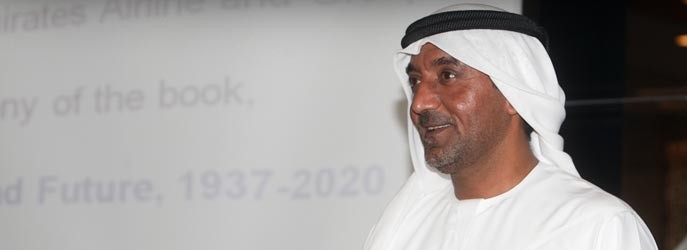
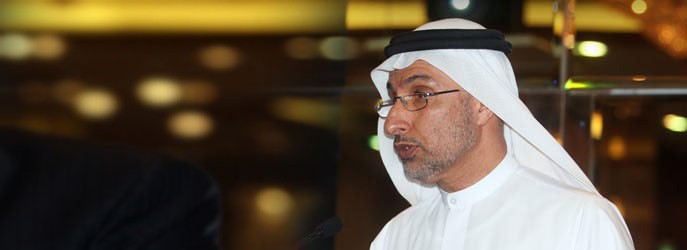
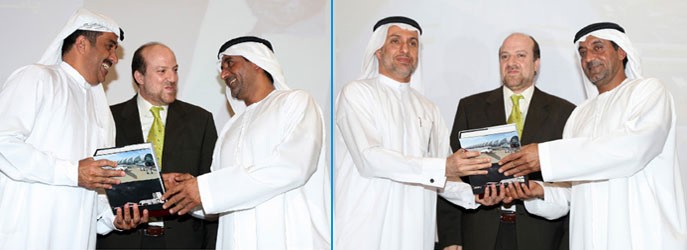
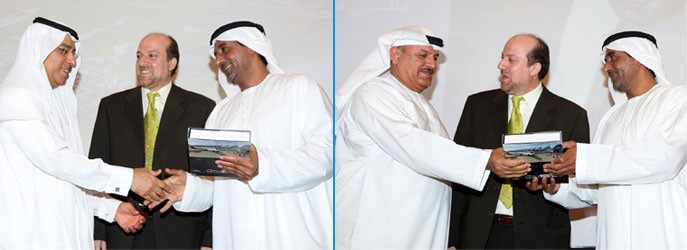
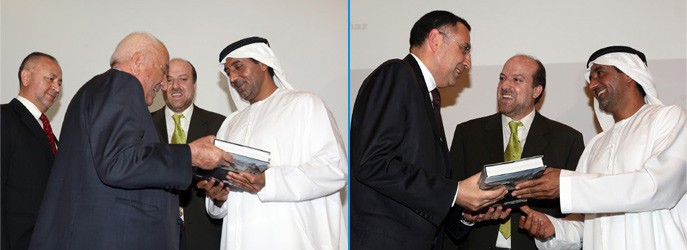
What sets this book apart from other similar works is that while it addresses the need to chronicle the history of the development of the air transport industry in Dubai, it also adds a human touch, an element of nostalgia, through anecdotes and testimonies from individuals who have witnessed these developments at close range and contributed to making Dubai an icon that is hard to emulate.
I would like to congratulate and thank the author of the book for his commendable effort in presenting many facts and valuable information on the history and future of the aviation industry in Dubai. This book is certainly a qualitative addition to the library, and a rich source of reference for the aviation sector in this part of the world.
H.H.Sheikh Ahmed Bin Saeed Al Maktoum |
|
 |